


Innovative techniques



The minimally invasive penile prosthesis implant technique is minimally invasive and therefore revolutionary:
I developed it after a long period of training in the United States, where I collaborated with one of the most important American andrologists, Professor Paul Perito of Coral Gables Hospital in Florida. I use it mainly in patients who have undergone surgery for prostate cancer and in those suffering from induratio penis plastica of the penis.
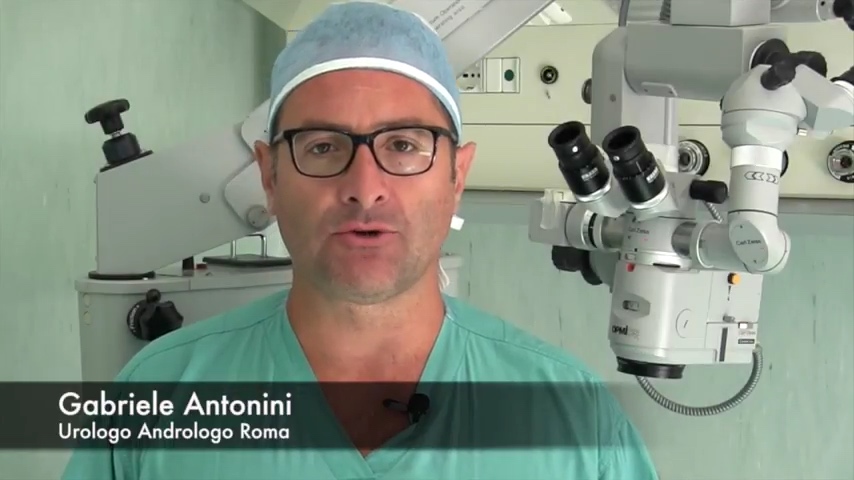
Interview with Dr Gabriele Antonini
An active and fulfilling sex life is possible, even if you have undergone prostate surgery that has left you with a functional deficit. The definitive solution is a penile prosthesis, or intracavernosal device, which can now be implanted with a minimally invasive procedure. Gabriele Antonini, the first and only person in Italy to perform this innovative technique, explained the details to us. He is an andrologist urologist in the “U. Bracci” Urology Department at the Policlinico Umberto I hospital in Rome.
Erectile dysfunction after prostate cancer surgery: when is a penile prosthesis necessary?
Erectile dysfunction problems mainly affect prostate cancer patients, but also those who have undergone colorectal surgery and patients with diabetes. Erectile dysfunction can be more or less severe, depending on the vascular microlesions reported. Post-surgical rehabilitation involves the use of oral medications such as sildenafil and tadalafil, which, however, do not guarantee a full recovery of sexual activity. In fact, most of the time they prove ineffective. In these cases, the only therapeutic solution is therefore the implantation of an intracavernosal device that restores the sexual organ to perfect functioning.
How does a penile prosthesis work?
Blood no longer circulates, so this deficiency must be compensated for in order for the organ to function. The hydraulic prostheses I use are called three-component prostheses. They consist of two inflatable cylinders, an activator device and a spherical reservoir. The activation mechanism, which is hidden inside the scrotum between the two testicles, is started manually and causes the liquid, a physiological solution, to flow from the reservoir into the cylinders located in the two corpora cavernosa, which then inflate and stiffen.
What are the characteristics of the technique you use and what are its advantages over others?
The technique I use, called Minimally Invasive Penile Prosthesis Implant, is minimally invasive and therefore revolutionary. I learned and perfected it after a long period of training in the United States, where I collaborated with one of the most important American andrologists, Professor Paul Perito of Coral Gables Hospital in Florida. I use it mainly in patients who have undergone surgery.
for prostate cancer and in those affected by penile deformity due to induratio penis plastica.
The innovation lies entirely in the technique used to position the implant: an infrapubic incision of just 2.5 cm is made at the base of the penis to implant the hydraulic penile prosthesis. The operation lasts twenty minutes, compared to 50 minutes for the traditional procedure. This is to the benefit of post-operative pain, which is almost non-existent, and the risk of infection, which is considerably reduced and close to zero per cent. Previously, the surgical incision was made between the penis and the scrotum, with much greater post-operative discomfort and the possibility of the patient activating the system only after a month. Now, with this new approach, the recovery time has been significantly reduced and the system can be activated just seven days after the operation, with sexual activity resuming after one month.
How important is the psychological aspect of accepting the prosthesis?
Once the oncological aspect has been overcome, attention must be paid to the psychological aspect and the patient’s sex life. In general, prostate cancer patients are over 60 years of age, although early diagnosis thanks to the introduction of PSA allows the tumour to be detected even around the age of 50. However, this does not mean that once the disease has been overcome, one must give up an active and satisfying sex life, which provides psychological and physical well-being and energy to manage the disease.
The problem must be accepted. Many patients give up an active sex life because the thought of having a penile prosthesis implanted is seen as a deficit and an impairment. The common perception is that the intracavernosal device is something external to the body, with the famous pump visible to the naked eye. On the contrary, this type of implant is internal to the body and completely invisible, allowing for penile turgidity equal to that of a 20-year-old. For this reason, it should be compared in terms of its usefulness for quality of life to a hip prosthesis or a heart valve.
How important is the doctor-patient relationship in these cases?
Cancer rightly takes up a lot of the specialist’s time and, in the vast majority of cases, after brilliantly solving the underlying problem, the quality of sexual life is neglected, creating a deep state of depression and frustration in the patient. In my view, urologists must be fully dedicated to andrology in order to establish a relationship of friendship and trust with their patients, creating empathy between the parties and allowing them to open up and face both the surgical phase and the subsequent follow-up phase with peace of mind.
Reception and Assistance
Prof. Antonini works at the following healthcare facilities:
Quisisana
Via Gian Giacomo Porro, 5 – 00197 Rome - Italy
Telephone +39 06 809581
Santa Lucia
Via Ospedale, 2 – 06034 Foligno (PG)- Italy
Telephone +39 0742 710080
Studio Duam
Via Fontana, 2 – 20122 Milan – Italy
Telephone +39 02 7631 6689
Ospedale Viamed Santa Elena
C. de la Granja, 8, Chamberí – 28003 Madrid, Spain
Telephone +34 622 28 44 25
Appointments and Emergencies
(+39) 06 64821375
Medical Practice
(+39) 351 7844455
Appointments and emergencies
Online visit
This service allows you to make a preliminary visit to investigate any issues that may have been identified.
To make an appointment, please contact our office: (+39) 06 64821375

Coral Gables, FL, Stati Uniti

Antonini Urology © 2015 | All rights reserved
VAT number 09376421005
Registration Medical Order in Italy n. 49344