


Double penile prosthesis and urinary sphincter implant
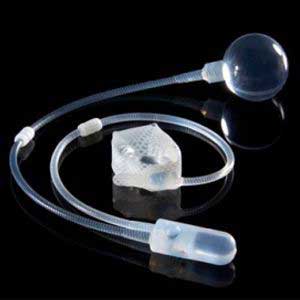

Erectile dysfunction and urinary incontinence following prostatectomy: prosthetic solutions and surgical approaches
Erectile dysfunction (ED) and urinary incontinence due to sphincter deficiency are two common conditions following radical prostatectomy, often related to neurovascular damage or anatomical alterations. Although they can initially be managed with conservative therapies, in refractory cases, prosthesis implantation is a definitive solution.
Erectile dysfunction: penile prostheses and implantation techniques
Penile prostheses are divided into:
- Malleable (semi-rigid): flexible silicone rods that provide a permanent but mouldable erection.
- Hydraulic (2 or 3 components): devices that simulate physiological erection through a filling/draining mechanism.
Surgical technique for penile prosthesis implantation
Surgical access:
- Peno-scrotal incision (most common): allows excellent exposure of the corpora cavernosa and positioning of the pump in the scrotum.
- Subpubic incision: alternative in selected cases, useful in patients with previous pelvic surgery.
- Dilation of the corpora cavernosa:
- Use of Hegar dilators or dedicated instruments to create space for the cylindrical components.
Prosthesis placement:
- Accurate measurement of length to avoid ‘glans floppy’ or excessive tension.
- In hydraulic models, placement of the reservoir in the Retzius space (via extraperitoneal) and the pump in the scrotum.
Intraoperative function test (for hydraulic prostheses) and layered closure.
Urinary incontinence: artificial sphincter (AUS) and implantation techniques
The artificial urinary sphincter (AUS) is the gold standard for severe incontinence. The most commonly used model (AMS 800) comprises:
- Urethral cuff: positioned around the bulbar urethra.
- Scrotal pump: allows activation/deactivation of the device.
- Pressurised reservoir: located in the retroperitoneal space.
- Surgical technique for AUS implantation
- Positioning of the urethral cuff:
Perineal access with longitudinal or transverse incision.
- Careful dissection around the bulbar urethra to avoid vascular damage.
- Measurement of the cuff (typically 4–5 cm) to ensure effective occlusion.
- Placement of the pump in the scrotum (contralateral to any penile prostheses).
- Placement of the reservoir in the retropubic space (via the inguinal or abdominal route).
- Connection of the tubes and intraoperative testing of function.
Combined implant (penile prosthesis + AUS): advantages and surgical approach
The combined procedure is performed in a single session, with logistical advantages and reduced recovery times.
Combined surgical technique
Preoperative planning:
- Urodynamic assessment and pelvic imaging to rule out urethral strictures.
- Choice of prosthesis size to avoid anatomical conflicts.
Operative sequence:
- First phase: penile prosthesis implantation (peno-scrotal access).
- Second phase: AUS implantation (urethral cuff and accessory components).
Critical considerations:
- Avoid compression of the urethra between the UCE sleeve and penile cylinders.
- Alternate positioning of scrotal pumps (if necessary).
Postoperative management:
- Activation of the UCE after 4–6 weeks to promote healing.
- Prolonged antibiotic therapy to reduce the risk of infection.
Complications and intraoperative management
- Infections: reduced risk with hydrophilic prostheses and prophylactic antibiotics.
- Urethral erosion: more frequent in irradiated patients; requires atraumatic dissection technique.
- Mechanical malfunctions: surgical revision in approximately 10–15% of cases at 10 years.
The combined implantation of a penile prosthesis and artificial sphincter is an effective and safe strategy, with standardised surgical techniques. The surgeon’s experience and careful patient selection are crucial to optimising results.
Reception and Assistance
Prof. Antonini works at the following healthcare facilities:
Quisisana
Via Gian Giacomo Porro, 5 – 00197 Rome - Italy
Telephone +39 06 809581
Santa Lucia
Via Ospedale, 2 – 06034 Foligno (PG)- Italy
Telephone +39 0742 710080
Studio Duam
Via Fontana, 2 – 20122 Milan – Italy
Telephone +39 02 7631 6689
Ospedale Viamed Santa Elena
C. de la Granja, 8, Chamberí – 28003 Madrid, Spain
Telephone +34 622 28 44 25
Appointments and Emergencies
(+39) 06 64821375
Medical Practice
(+39) 351 7844455
Appointments and emergencies
Online visit
This service allows you to make a preliminary visit to investigate any issues that may have been identified.
To make an appointment, please contact our office: (+39) 06 64821375

Coral Gables, FL, Stati Uniti

Antonini Urology © 2015 | All rights reserved
VAT number 09376421005
Registration Medical Order in Italy n. 49344