


Prostate Hypertrophy
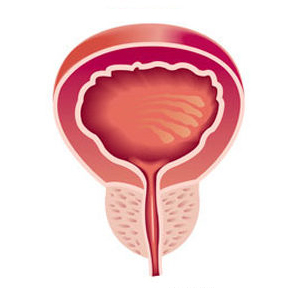
BPH
The prostate is the male genital gland located below the bladder around the urethra, the duct through which urine flows.
The prostate produces a secretion (prostatic fluid) that contributes to the formation of seminal fluid. At birth, the prostate is about the size of an almond.
During puberty, its volume increases under the stimulation of male hormones (androgens).
Around the age of 50, in most men, the prostate continues to increase in volume, narrowing the urethral canal and causing urinary problems.
Total obstruction
Early signs of obstruction
Physiological
A common condition, present in 50% of men over the age of 50 and in 88% of men over the age of 80.
Bladder irritation resulting from incomplete emptying causes very frequent problems.
THE MAIN SYMPTOMS ARE:
- Increased frequency of urination
- Weak urinary flow
- Hesitation in urination
- Dribbling at the end of urination
- Need to strain when urinating
- Burning sensation
- Painful urination


DIAGNOSIS OF BPH
In this case, the medical examination involves performing an abdominal physical examination and a rectal examination, which gives an idea of the volume of the prostate gland and highlights the possible presence of suspicious nodules. The patient is also given a questionnaire, called the I-PSS, which provides guidance on the severity of the symptoms. It is then necessary to prescribe some further tests, such as a urine test with possible urine culture, PSA (prostate-specific antigen) testing, kidney function tests and a flowmetry test (a test that measures the speed of urinary flow during urination, simply by urinating into a special instrument called a flowmeter). Depending on clinical and therapeutic needs, a transrectal prostate ultrasound, an abdominal ultrasound, and a urodynamic test with pressure/flow curve may also be required.
One of the most common complications of BPH is an increased risk of urinary tract infections due to urine retention in the bladder. There are two types of treatment: medical and surgical. Medical therapy uses drugs to relieve symptoms, such as alpha-blockers. These relax the muscles of the prostate and bladder neck, thereby increasing urinary flow. In addition to alpha blockers, 5α-reductase inhibitors are also used. Combination therapy with alpha blockers and 5α-reductase inhibitors has been shown to drastically reduce prostate volume. If medical treatment fails, surgical treatment may be necessary. This involves removing part of the prostate through the urethra. It is important not to ignore the first signs of a possible urinary tract disorder and, if symptoms persist, it is advisable to seek medical advice. Early diagnosis of the cause of the disorder allows prompt intervention to prevent or at least slow down the progression of the disease to a more serious condition, which could have repercussions on the individual’s personal and social life.
BPH is not a tumour, nor is it an early stage of cancer.
Reception and Assistance
Prof. Antonini works at the following healthcare facilities:
Quisisana
Via Gian Giacomo Porro, 5 – 00197 Rome - Italy
Telephone +39 06 809581
Santa Lucia
Via Ospedale, 2 – 06034 Foligno (PG)- Italy
Telephone +39 0742 710080
Studio Duam
Via Fontana, 2 – 20122 Milan – Italy
Telephone +39 02 7631 6689
Ospedale Viamed Santa Elena
C. de la Granja, 8, Chamberí – 28003 Madrid, Spain
Telephone +34 622 28 44 25
Appointments and Emergencies
(+39) 06 64821375
Medical Practice
(+39) 351 7844455
Appointments and emergencies
Online visit
This service allows you to make a preliminary visit to investigate any issues that may have been identified.
To make an appointment, please contact our office: (+39) 06 64821375

Coral Gables, FL, Stati Uniti

Antonini Urology © 2015 | All rights reserved
VAT number 09376421005
Registration Medical Order in Italy n. 49344